Pixel Blast: Robot Shooter
- 4.7
- Rating
- 500.00K
- Installs
- Free
- Price

 Analysis by App-foxy
Pixel Blast: Robot Shooter is the kind of puzzle game I can understand within seconds but still find surprisingly easy to revisit. The basic idea is immediate: tap to fire at colored cubes, make room on the grid, and use factory robots to help keep the board under control. That simplicity is its biggest strength during the first few sessions, although it also raises an important question: does the game remain interesting once the initial novelty wears off?
My answer is cautiously positive. This is a free puzzle game from Bluetile, rated Everyone, and it works best as a short-session option rather than a deep replacement for a traditional strategy game. I enjoyed the compact loop, especially when I wanted something that required attention without demanding a long commitment. At the same time, the one-tap format leaves less room for variety than a larger puzzle title, so its lasting appeal depends on whether you enjoy optimizing a small space repeatedly.
Why the first week feels so approachable
The opening appeal comes from how little preparation the game seems to require. I do not need to learn a complicated control scheme before making useful moves. Tapping to shoot gives every action a clear physical connection, while the colored cubes make the board readable at a glance. That matters on a phone, where a puzzle can quickly become irritating if the screen is crowded or the controls feel indirect.
You May Also Like

 Blood Strike: 2.5 Anniversary
Blood Strike’s Loadouts Turn Every Drop Into a Tactical Gamble
A close look at Blood Strike’s custom loadouts: how fast access to signature weapons reshapes its battle royale rhythm, rewards preparation, and narrows the gap between fights.

 Pandora - Music & Podcasts
Pandora’s Music Is Easy to Start, but Harder to Recover
Pandora’s strength is its low-effort path from a seed to a station. Its weak spot is how much confidence it asks you to place in connection, setup, and quiet recovery.

 8 Ball Pool
 Is Built on Rivalries, Rematches, and Routine
A close look at the rivalries, rematches, shared routines, and unanswered safety questions that turn a quick pool match into a persistent mobile community.

 Samsung Music
’s Quiet Strength Is Playing What You Already Own
Its reach comes less from spectacle than from dependable access to a personal library. That simplicity is both the app’s strongest retention engine and its ceiling.

 AccuWeather: Weather Radar
AccuWeather Review: A Quick, Clear Forecast for Everyday Decisions
For everyday plans, the best forecast is the one you can understand quickly. AccuWeather makes rain timing, radar, and local conditions easy to act on, with a few trade-offs.

 Hill Climb Racing
Why Hill Climb Racing Still Turns Crashes Into One More Run
A tiny car, a bumpy hill and one more upgrade: Hill Climb Racing keeps resurfacing because its simple chaos makes every near-miss feel personal.
More From Our News Desk
View All News


During my first sessions, the satisfying part was not simply removing cubes. It was deciding which part of the grid deserved attention first. A shot that solves an immediate problem may leave an awkward arrangement behind, while a more patient move can preserve room for the next wave of decisions. The factory robots add another layer to that process. They are not just decoration; they encourage me to think about when assistance is more valuable than an immediate attack.
The strongest early habit is to treat open grid space as a resource. New players may focus on clearing the most obvious color or target, but I found that preserving a workable area often mattered more than chasing the fastest visible result. This is a useful distinction because the game looks like a reflex title at first. In practice, its better moments come from planning a few taps ahead.
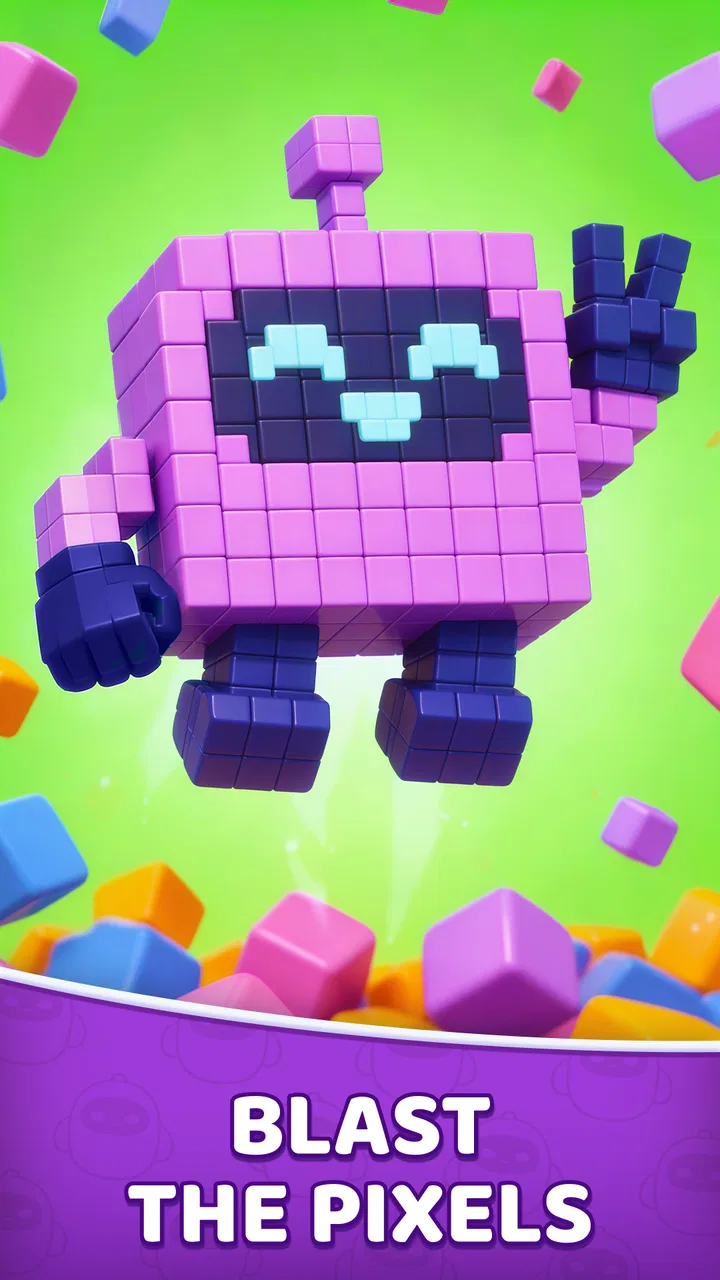
The presentation also supports quick learning. Pixel art gives the game a clear identity without making the board difficult to read. I could pick it up during a short break, understand what needed attention, and put it down without feeling that I had abandoned a complicated campaign. That makes it a natural fit for commuting, waiting rooms, or the few minutes before bed, provided I am in the mood for a focused rather than relaxing activity.
The first week is helped by the contrast between shooting and factory management. A straightforward blast feels active, while deploying a robot introduces a more deliberate choice. That combination gives the game more personality than a basic tap-to-clear puzzle. It is still compact, but the interaction between immediate removal and planned support gives the early experience enough texture to keep me curious.
Small decisions that improve the opening experience
I recommend resisting the urge to spend every useful action as soon as it becomes available. When the board looks comfortable, that is often the best moment to prepare for a less comfortable state. Keeping a route through the grid can be more valuable than clearing one attractive cluster. This is not a dramatic advanced system, but it changes the way I play and makes the game feel less random.
Robots are also easier to appreciate when I think of them as timing tools rather than emergency buttons. Deploying one simply because it is available may solve the current screen while leaving the next decision harder. Waiting until the board begins to compress can produce a more meaningful benefit. I would not describe this as a complex economy, but it is a real trade-off that becomes visible after a few rounds.
Another practical tip is to play with a clear stopping point. The game invites “one more attempt” because each round is easy to start, but repeated retries can make the same visual pattern feel less fresh. I got more enjoyment by treating a session as a handful of focused attempts instead of measuring success by how long I could continue. That approach also fits the game’s strongest use case: a compact mental reset.
What remains useful after the novelty fades
After the first month, the question is no longer whether the core action is pleasant. It is whether the interaction between colored cubes, grid space, and robots gives me enough reason to return. For me, the answer depends heavily on how much I enjoy incremental improvement. Pixel Blast: Robot Shooter does not need a huge story to work, but it does need the player to care about making cleaner decisions than last time.
That makes it more suitable for people who like repeatable puzzle routines than for players looking for constant discovery. If I want new characters, a broad campaign, or a changing narrative, this is not the right destination. If I enjoy examining a board, spotting a better order of actions, and gradually becoming more efficient, the compact design has recurring value.
The game’s free entry point helps here. I can try the central loop without committing money at the start, which is useful because the long-term fit is personal. The store lists in-app purchases ranging from $1.99 to $99.99 per item, so I would approach spending carefully and decide whether any purchase genuinely improves my experience rather than treating payment as part of the basic requirement to play.
In practical terms, I would keep it installed if I wanted a dependable short puzzle break. I would not rely on it as my only game. Its best role is alongside a deeper puzzle title, a story-driven game, or something more relaxing. Pixel Blast gives me quick decisions and a little pressure; a larger alternative may offer more varied goals and a stronger sense of progression. The choice comes down to whether convenience or breadth matters more on a particular day.
The current version is 1.5.0, and the game supports devices running Android 7.0 or later. Those details make it accessible to people using older compatible phones, although actual comfort will still depend on screen size and device performance. On a smaller display, the simple visual language is helpful, but crowded board states may require more careful tapping than they would on a larger phone.
Who gets the most month-to-month value
I think the best audience is someone who enjoys compact spatial puzzles and wants a game that can be played in brief, repeatable sessions. It also suits players who like the feeling of improving a routine without learning a large rulebook. The robot element gives the familiar clear-the-board format a small management decision, which may be enough to keep a puzzle fan engaged longer than a purely automatic matching game.
It is less convincing for anyone who needs a strong sense of permanent progression. If your enjoyment depends on unlocking a large collection, following a detailed plot, or seeing a constantly changing world, the one-tap structure may feel narrow. I would also skip it if I wanted a completely calm experience, because clearing a tightening grid can create pressure even when the controls remain simple.
A realistic everyday use is a ten-minute break between tasks. I can start a round, focus on the most urgent area, and stop after a small set of attempts without needing to remember a complicated storyline. That makes it more practical than many large puzzle adventures. The trade-off is that the same convenience can expose the limited variety sooner, especially if I play for long stretches every day.
Maintenance, friction, and the reasons fatigue can arrive
The maintenance burden is low in one sense: there is no complicated routine I need to perform before playing. I can return after a gap and immediately understand the basic objective. That is valuable for a casual game because it avoids the feeling that I have fallen behind. The downside is that a simple loop has fewer layers to rediscover after time away.
My main concern is repetition. Shooting colored cubes and managing robots is a clear identity, but it is also a tightly defined identity. If the board situations do not feel meaningfully different from one session to the next, the action may become mechanical. I noticed that fatigue was more likely when I played continuously than when I used the game as a short interlude. The same design that makes it convenient can therefore limit its endurance.
There is also a tension between speed and thought. The game feels lively when I tap decisively, but the better choices often require pausing to inspect the grid. Players who want instant arcade feedback may find that pause slightly slows the experience, while players who prefer careful planning may wish the puzzle offered more room for elaborate setups. Its middle ground is appealing, but not perfect for either extreme.
Another source of friction is the presence of optional spending in a game whose central loop is deliberately accessible. The listed purchase range is broad, and that can make me more cautious about the long-term relationship with the game. I prefer to establish a regular play habit first, then decide whether paying adds meaningful convenience or enjoyment. For a free download, that is a reasonable approach, but it means the purchase design should be part of my decision rather than an afterthought.
To keep the experience fresh, I would rotate it with another game instead of forcing a daily streak. A useful personal rule is to stop when I begin tapping automatically rather than thinking about the grid. Returning later with a clear head makes the robot decisions and color priorities feel more deliberate. This is a small maintenance habit, but it matters because the game’s lasting value comes from attention, not from simply repeating inputs.
How it compares with familiar puzzle alternatives
Compared with a traditional match-three game, Pixel Blast: Robot Shooter feels more direct and less dependent on building long chains through a familiar swapping mechanic. The shooting action gives each move a stronger sense of impact, while the robots create a planning angle that is different from collecting boosters. However, a match-three game may offer more established variety through special pieces, themed stages, and broader progression systems.
Compared with a pure arcade shooter, this game is slower and more considered. The colored grid asks me to manage space instead of relying only on reaction speed. That makes it a better choice when I want a little mental planning, but a worse choice when I want constant movement and immediate action. It also differs from a deep logic puzzle: the rules are easier to grasp, yet the game may not provide the same satisfaction as solving a carefully constructed brainteaser.
Its most distinctive position is between those categories. It has the accessibility of a casual tap game, the pressure of an arcade board, and a small amount of factory-style decision-making. That blend is specific enough to give it character, but compact enough that players seeking a large system may outgrow it. I would choose it for convenience and tactile clarity, not for a huge amount of content.
My long-term verdict on keeping it installed
Pixel Blast: Robot Shooter earns lasting space on my phone if I treat it as a focused pocket puzzle rather than a game I must play for hours. Bluetile has built a clear loop that is easy to enter, easy to explain, and more thoughtful than the one-tap presentation initially suggests. The colored cubes establish immediate goals, while the factory robots give me a reason to consider timing and board shape.
The game has also attracted a strong response, with an average rating of 4.8 from around 14K ratings and over 100K installs. Those figures fit my impression that the basic idea is easy to appreciate. They do not change the central limitation, though: a high-quality short loop is still a short loop. Whether it remains installed depends on how much I value repeatable optimization over constant novelty.
I would recommend it to a friend who wants a free, Everyone-rated puzzle for short breaks and enjoys making better decisions on a compact grid. I would specifically suggest playing in controlled sessions, saving robot deployment for moments when it changes the board meaningfully, and avoiding purchases until the free experience has proved its staying power.
I would not recommend it as the main game for someone who needs a rich campaign, extensive variety, or a completely hands-off relaxation experience. For those players, a larger puzzle adventure or a slower logic game will probably offer more lasting depth. But for the right player, this is a tidy and enjoyable habit: open it, read the grid, make a few purposeful taps, and leave before the repetition takes over.
My final view is that the novelty does fade, but the game does not become pointless when it does. Its recurring value comes from sharpening a small decision-making routine, not from endlessly revealing new systems. If that modest goal matches what I want from a mobile game, I can see myself returning regularly. If I need broader progression, I would keep looking elsewhere.
FAQs for Pixel Blast: Robot Shooter
01What is the main objective of Pixel Blast: Robot Shooter?
Pixel Blast: Robot Shooter is an action-packed game where players aim to defeat waves of robotic enemies. The primary goal is to survive as long as possible while completing various missions and challenges. Players can upgrade their weapons and skills to tackle increasingly difficult levels and bosses.
02Is Pixel Blast: Robot Shooter available on both Android and iOS?
Yes, Pixel Blast: Robot Shooter is available for download on both Android and iOS platforms. You can find it on the Google Play Store for Android devices and the Apple App Store for iOS devices. Ensure your device meets the minimum system requirements for optimal performance.
03Does Pixel Blast: Robot Shooter require an internet connection to play?
Pixel Blast: Robot Shooter can be played offline, but some features, such as leaderboards and in-game purchases, require an internet connection. Playing online also provides access to regular updates, new levels, and special events that enhance the gaming experience.
04Are there in-game purchases in Pixel Blast: Robot Shooter?
Yes, Pixel Blast: Robot Shooter includes in-game purchases. Players can buy coins, weapons, and other upgrades to enhance their gameplay. While the game can be enjoyed without spending money, these purchases can help players progress faster and tackle challenging levels more effectively.
05What age group is Pixel Blast: Robot Shooter suitable for?
Pixel Blast: Robot Shooter is suitable for players aged 12 and up. The game features animated violence and strategic gameplay, making it ideal for teenagers and adults who enjoy action-packed shooter games. Parents are advised to review the game content if concerned about suitability for younger children.
Pros
- Engaging gameplay with vivid graphics.
- Wide variety of levels and challenges.
- Smooth controls enhance user experience.
- Frequent updates with new content.
- Offline play available for convenience.
Cons
- In-app purchases can be pricey.
- Occasional ads interrupt gameplay.
- Requires significant storage space.
- Some levels might feel repetitive.
- Limited customization options for characters.

Pixel Blast: Robot Shooter
Gallery